EDU 119
Section outline
-
Highlighted
-
-
-
-
-
On Children
Factors that Influence the Effects of Traumatic Event: The effects of traumatic events can be influenced by a number of factors. Depending on the specific nature of the event, these may include:
- The severity of the event
- Age at the time of the events
- Prior mental health history
- How badly a child was hurt or could have been
- How close a child was to were to where the event happened
- What or who stopped the event and whether anybody came to help
- How adults or caregivers reacted upon disclosure (e.g., whether they believed the child and supported them)
- How many times the event happened and over how much time
- If the event resulted in long-lasting disruptions
- If the child had experienced other traumatic events prior to this one
Immediate impact: There are a number of potential immediate ways children can be impacted by trauma exposure and it will vary by developmental age.
For example:
- Can increase risk of additional traumatic events
- Posttraumatic Stress, Depression, Anxiety, & Other Disorders
- Numbness, Desensitization to Threat
- Subsequent Victimization
- Recklessness & Reenacting Behavior
Long term potential impact
- Decreased Capacity to Regulation Emotion & Attention
- Impaired Social Development
- Impaired Cognitive Development: IQ, Language
- Poor Academic Performance
- Substance Use/Abuse
- Disparities in the classroom
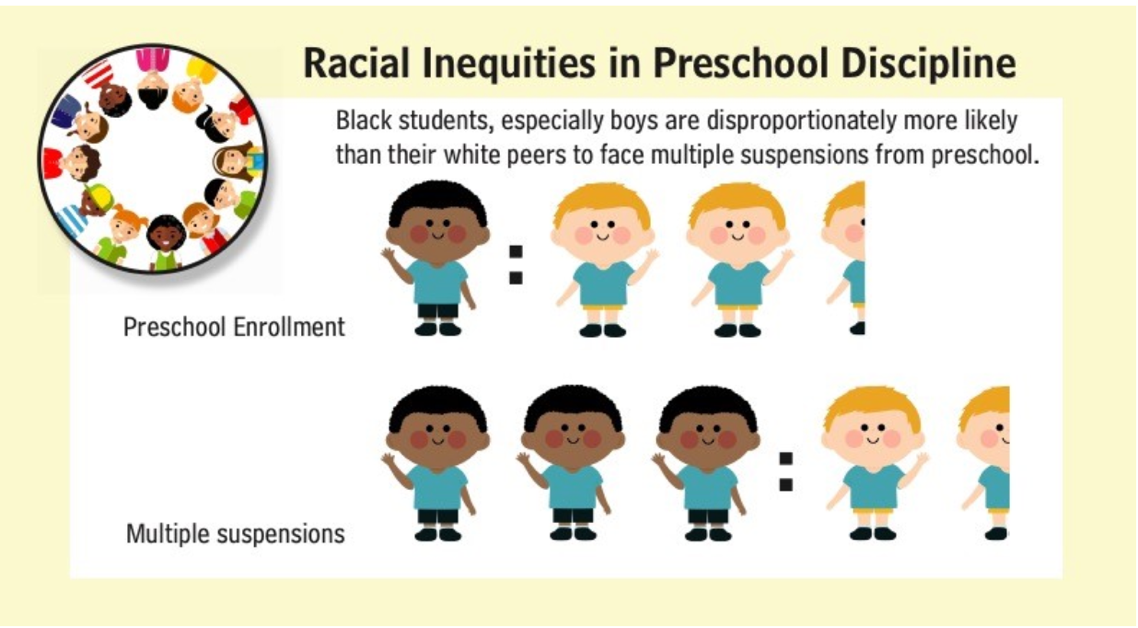
Specific to early childhood education, it is important to acknowledge that there are racial inequities in preschool discipline.
According to the National Prevention Science Coalition, Black preschoolers account for 47% of those suspended even though they represent 19% of the enrollment.
Southern states such as Louisiana, Mississippi, South Carolina, Georgia, and Texas drive much of the difference between Black and White children.
A number of resources exist for teachers such as those that are part of the National Association for the Education of Young Children (NAEYC)- (https://www.naeyc.org/standing-together-against-suspension-expulsion-early-childhood-resources)
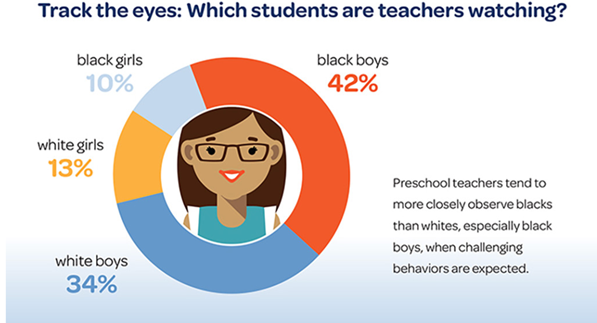
According to researchers from Yale Child Study Center, implicit bias may help to explain the relatively high expulsion rates for black children (2016) - Link to Article (https://news.yale.edu/2016/09/27/implicit-bias-may-explain-high-preschool-expulsion-rates-black-children)
They used eye tracking technology and found that preschool teachers were more likely to closely observe black students (especially boys) when challenging behaviors were expected. They also found that black preschool teachers held black students to a higher standard of behavior. Researchers speculated that black educators might be demonstrating “a belief that black children require harsh assessment and discipline to prepare them for a harsh world.” And that white educators “may be acting on a stereotype that black preschoolers are more likely to misbehave in the first place so they judge them against a different, more lenient standard than what they’re applying to white children
Immediate impact
- According to the NCTSN, traumatic events can happen to any or all members of a family and all families experience the trauma differently. While some families may show signs of resilience and provide support to one another, others may experience more stress and have problems maintaining roles/functions in the family in the short term.
- Research shows there are a number of relationships that can be strengthened or stressed through traumatic events and can impact many aspects of how families function. Examples of relationships that can be impacted include extended family relationships, sibling relationships, adult intimate relationships, parent-child relationships, and relationships with the broader community.
To learn more, please read this Fact Sheet: Trauma and Families; Fact Sheet for Providers (PDF, external link)
On Early Childhood Caregivers/Teachers
o Immediate impact
https://www.virtuallabschool.org/focused-topics/trauma-informed-care/lesson-3?module=14486
https://www.virtuallabschool.org/focused-topics/trauma-informed-care/lesson-4
https://eclkc.ohs.acf.hhs.gov/mental-health/article/understanding-trauma-healing-adults
https://eclkc.ohs.acf.hhs.gov/video/early-essentials-webisode-6-professionalism-self-care
ResiliencyWhat is resilience?
- The ability of child to recover and show early and effective adaptation after a potentially traumatic event
- The ability for a child to respond to the event with minimal distress or impact on daily functioning
- Caregivers may see a temporary dip in ability to cope followed by early and effective return to a child’s usual functioning
What makes adults uniquely effective at the promotion of resilience?
Early identification of trauma exposure in youth and ability to promote and enhance natural strengths
What factors might promote resilience after exposure to a traumatic event?
- External:
- Support from parents, friends, school, and community (e.g., strong relationship with caregiver/adult)
- Resources that buffer negative consequences
- Feeling safe at home, school, and/or community
- Internal:
- Heightened self-esteem and self-worth
- Sense of self-efficacy
- Meaning in one’s life (e.g., spiritual or cultural beliefs)
- Talents or skills in certain areas (e.g., art, sports)
- Adaptive and flexible coping skills
- Maybe prompt them to think about all of the potential ways Chad has been exposed to trauma. Then have them think about the factors in Chad’s life that have helped him to become resilient.
- Open up a discussion about how students can help children become more resilient in their future work.
-
-
North Carolina law requires all adults to report suspected child maltreatment. You do not need proof that maltreatment has occurred; you only need reasonable cause to suspect maltreatment. You do not need anyone’s permission to file a report. (taken directly from Prevent Child Abuse NC)
-